Dental Implant or Dental Bridge? How to Choose the Right Option
Making the right choice for your oral health.
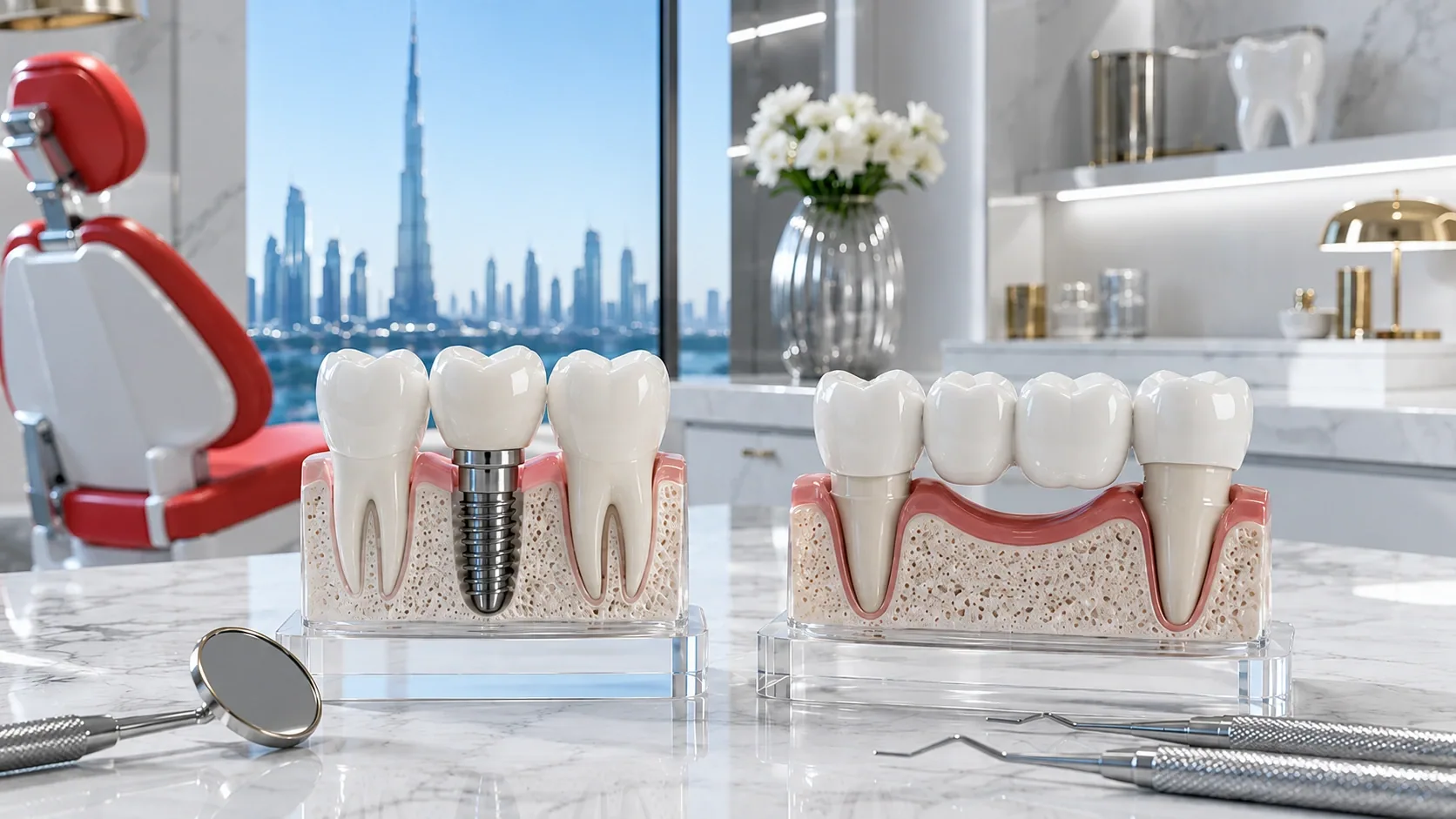
Making the right choice for your oral health.
Missing a tooth can affect more than just your appearance. It can impact your ability to chew comfortably, speak clearly, and maintain long-term oral health. Fortunately, modern restorative dentistry offers effective solutions to replace missing teeth and restore your smile.
Two of the most common options recommended by dentists in Dubai are dental implants and dental bridges. Both treatments can deliver excellent results, but choosing the right solution depends on your oral health, lifestyle, budget, and long-term goals.
If you're considering tooth replacement and wondering whether a dental implant or a dental bridge is right for you, this guide explains the key differences to help you make an informed decision.
Untreated tooth loss can lead to jawbone deterioration within months. Early intervention helps preserve bone structure and often simplifies future treatment.
Dental implant vs dental bridge: key differences.
What Is a Dental Implant?
A dental implant is an artificial tooth root made from biocompatible titanium that is placed into the jawbone. Once healed, a custom dental crown is attached to restore the appearance and function of a natural tooth.
Dental implants are ideal for:
Single missing tooth replacement
Multiple missing teeth
Full mouth dental implants
Long-term tooth replacement solutions
Dental implants look and feel like natural teeth, preserve jawbone structure, and do not affect neighbouring teeth.
What Is a Dental Bridge?
A dental bridge replaces a missing tooth by anchoring an artificial tooth between two adjacent teeth using dental crowns. Unlike implants, bridges do not require surgical placement.
Dental bridges are ideal for:
Patients seeking a non-surgical solution
Faster tooth replacement
Cases where implants may not be immediately suitable
Bridges restore chewing function and provide a natural-looking appearance with a faster treatment timeline.
Which Option Lasts Longer?
When comparing longevity, dental implants generally offer the longest-lasting solution.
Longevity comparison:
Dental implants - can remain functional for many years with proper care, although longevity varies by patient
Dental bridges — typically provide excellent results for many years but may require replacement
Dental implants are the clear winner in long-term durability.
Which Option Looks More Natural?
Modern dental implants and bridges are both designed to blend seamlessly with natural teeth.
Aesthetic advantages of implants:
Emerge directly from the gum line like natural teeth
Help preserve natural gum and bone contours
Prevent the sunken appearance caused by bone loss
Dental implants provide an additional aesthetic advantage through natural gum and bone preservation.
Which Treatment Is More Affordable?
Dental bridges usually involve a lower initial investment compared to dental implant treatment. However, when evaluating long-term value, implants may offer greater durability and fewer future replacements.
Cost considerations:
Dental bridge — lower upfront cost
Dental implant — higher initial investment with greater long-term value
Insurance coverage may apply to both options depending on your plan
The best option often depends on your individual treatment goals and oral health condition.
Which Treatment Protects Oral Health Better?
One of the biggest advantages of dental implants is their ability to stimulate and preserve the jawbone. After tooth loss, bone loss naturally occurs in the area where the tooth once existed.
Oral health benefits of implants:
Stimulates and preserves jawbone
Prevents bone resorption
Does not affect adjacent healthy teeth
Supports long-term oral health
Dental bridges restore function but do not prevent bone resorption beneath the missing tooth area.
Who Is a Good Candidate for Dental Implants?
A consultation with a dental implant specialist is the best way to determine eligibility based on your oral health.
You may be a suitable candidate if you:
Have one or more missing teeth
Have healthy gums
Have adequate jawbone support
Are in good general health
Want a long-term tooth replacement solution
Patients who are not immediately suitable for implants may benefit from preparatory procedures such as bone grafting.
When should you book an appointment?
Consider scheduling a consultation if any of the following apply.
You have one or more missing teeth
You struggle with chewing comfortably
Your smile confidence has been affected
You are considering dental implants or bridges
You want a personalised treatment recommendation
You are exploring restorative dental care options in Dubai
A professional evaluation can help determine the most suitable treatment based on your oral health and goals.
Why replacing missing teeth matters.
Many people postpone treatment after losing a tooth, especially if it is not visible when smiling. However, untreated tooth loss can lead to a range of long-term oral health complications.
Bone loss in the jaw
Teeth shifting out of position
Bite problems and jaw misalignment
Difficulty chewing
Increased strain on surrounding teeth
Changes in facial appearance
Early intervention helps maintain oral health, function, and confidence while reducing the likelihood of more complex treatment later.
Frequently asked questions.
Both are effective solutions. Dental implants generally offer greater durability, bone preservation, and independence from neighbouring teeth, while dental bridges may provide a faster non-surgical alternative.
Why patients choose WhiteLine for restorative dentistry.
Located in the heart of Al Rigga, WhiteLine Dental Clinic provides advanced restorative dentistry for patients across Deira and the wider Dubai region. Our experienced team offers comprehensive tooth replacement solutions tailored to your oral health and long-term goals.
Experienced dental implant specialists
Single and full mouth dental implants
Dental bridges and crown restorations
Advanced diagnostic imaging
Personalised treatment planning
Convenient location near Al Rigga Metro Station
Which option is right for your smile?
Both dental implants and dental bridges can restore missing teeth and improve confidence. Book a consultation to receive a customised treatment plan.
More from the journal.

How Breast Cancer Treatment Can Affect Your Oral Health
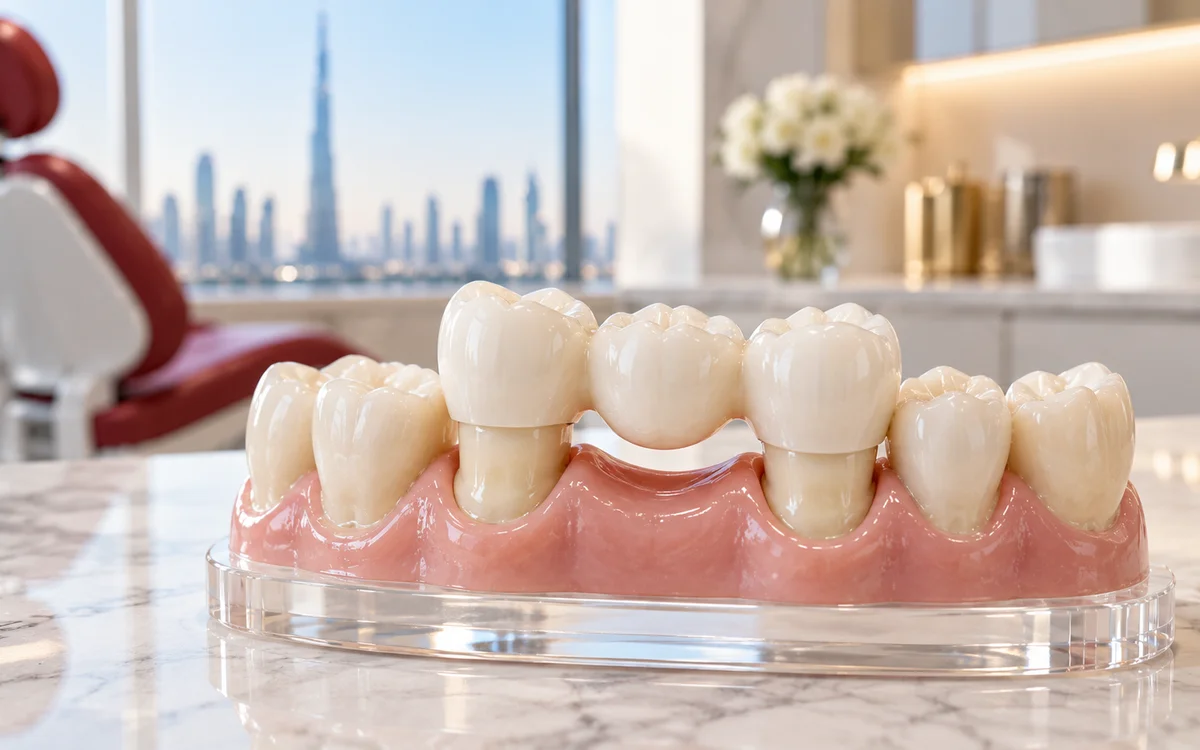
Dental Bridge in Dubai: Types, Cost Factors & What to Expect