Composite Veneers in Dubai: What They Are, Who They Suit & How They Compare
Understand your options before choosing a cosmetic treatment.
Introduction
If you are considering improving the appearance of chipped, discoloured, uneven, or slightly gapped teeth, you may have come across composite veneers or composite bonding.
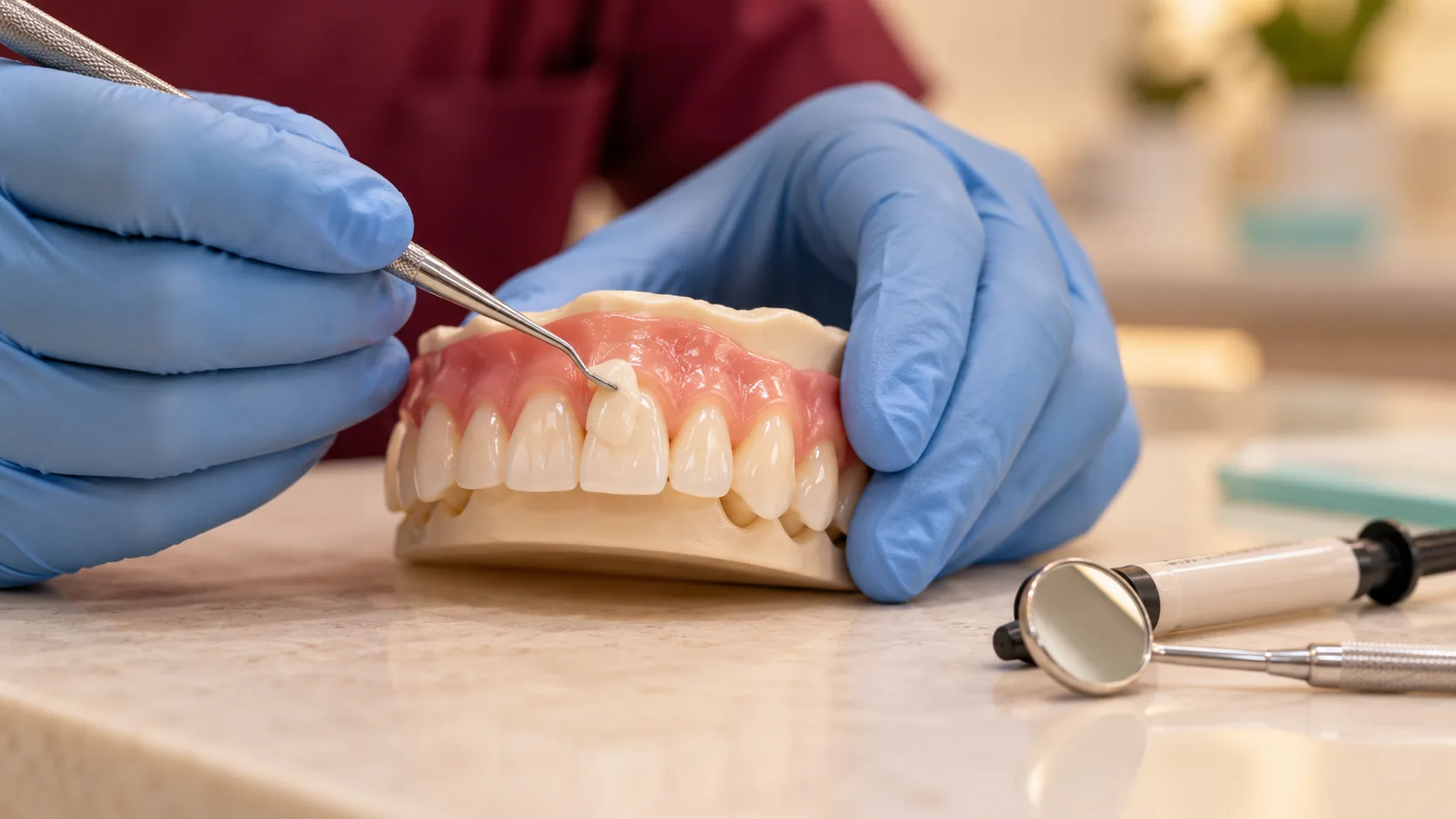
Unlike porcelain veneers, which are fabricated as custom shells before being bonded to the teeth, composite treatment uses a tooth-coloured resin material that is applied and shaped directly on the tooth. Resin-based composite materials are used in dentistry for both restorations and veneers.
For some patients, composite veneers can be a suitable cosmetic option because they can address several minor aesthetic concerns while retaining a relatively conservative approach to the natural tooth structure.
However, composite veneers are not suitable for everyone, and they are not automatically the better choice than porcelain veneers. The right option depends on your teeth, bite, oral health, aesthetic goals, and the type and extent of correction required.
If you are considering composite veneers in Dubai, here is what you should know before deciding.
Your guide to composite veneers.
What Are Composite Veneers?
Composite veneers are tooth-coloured restorations made from resin-based composite material that is bonded and shaped onto the visible surface of the teeth.
The material can be carefully sculpted to modify the appearance of a tooth, including its:
Shape
Size
Colour
Contour
Proportions
Minor spacing
Chipped or worn edges
Composite resin is tooth-coloured and can be used for veneers as well as other dental restorations. However, the material can be susceptible to staining and discolouration over time, which is an important consideration when comparing composite with ceramic or porcelain options.
The term composite bonding is also commonly used when the treatment involves adding composite resin to selected areas of a tooth rather than covering the entire visible surface.
Your dentist can determine whether composite veneers, composite bonding, porcelain veneers, whitening, orthodontic treatment, or another option is more appropriate for your situation.
Who May Be Suitable for Composite Veneers?
Composite veneers may be considered for patients who have relatively healthy teeth and want to address specific cosmetic concerns.
They may be an option for people with:
1. Minor Chips or Worn Tooth Edges
Small chips or worn edges can sometimes be restored by adding and shaping composite resin.
This can help restore the contour of the tooth while maintaining a natural-looking appearance.
2. Small Gaps Between Teeth
Small spaces between certain teeth may sometimes be reduced using composite material.
However, not every gap should be closed cosmetically. The underlying cause, tooth position, gum health, and bite should be assessed first.
3. Uneven Tooth Shape
Teeth that appear slightly irregular in shape or proportion may sometimes be reshaped visually with composite resin.
This can be useful when the concern is primarily the contour or size of an otherwise healthy tooth.
4. Mild Discolouration
Composite material can change the visible colour of a tooth. However, if the primary concern is tooth colour, your dentist may first discuss professional teeth whitening or another treatment.
It is also important to remember that existing restorations and veneers do not whiten in the same way as natural teeth.
5. Minor Cosmetic Irregularities
Composite treatment may sometimes be used to improve small aesthetic imperfections without requiring extensive treatment.
The key point is that composite veneers are primarily a cosmetic treatment. Your dentist should first assess your teeth and gums to make sure any underlying dental problems are addressed.
When Composite Veneers May Not Be the Right Option
Composite veneers are not a universal solution.
A dentist may recommend another treatment if you have:
Active tooth decay
Significant gum disease
Severe tooth damage
Major tooth misalignment
Significant bite problems
Extensive enamel loss
Heavy teeth grinding or clenching
Large restorations that require a different approach
For example, significant orthodontic problems may be better addressed with braces or clear aligners rather than attempting to camouflage tooth position with cosmetic treatment.
Similarly, a heavily damaged tooth may require a restorative treatment such as a crown rather than a veneer.
This is why a dental examination should come before choosing a cosmetic treatment.
Composite Veneers vs Porcelain Veneers
One of the most common questions patients ask is:
“Should I choose composite or porcelain veneers?”
There is no single answer for every patient.
The two treatments use different materials and techniques, and each has advantages and limitations.
| Feature | Composite Veneers | Porcelain Veneers |
|---|---|---|
| Material | Resin-based composite | Dental ceramic/porcelain |
| Application | Usually shaped directly on the tooth | Custom-made and bonded to the tooth |
| Customisation | Shaped by the dentist during treatment | Designed and fabricated before placement |
| Appearance | Can provide a tooth-coloured aesthetic | Ceramic can provide highly aesthetic results |
| Repairability | Composite can generally be repaired or added to | Repairs can be more complex depending on the damage |
| Staining | More susceptible to staining/discolouration | Generally more resistant to staining |
| Treatment approach | Often more conservative depending on the case | May require some tooth preparation depending on the case |
| Suitability | Often considered for selected minor cosmetic corrections | Often considered for broader aesthetic changes |
| Longevity | Depends on material, bite, habits and maintenance | Depends on material, bite, habits and maintenance |
The American Dental Association notes that resin-based composite materials are tooth-coloured and can be used for veneers, while also identifying potential staining and discolouration as a limitation. Ceramic materials are widely used for aesthetic veneers and have different material characteristics.
Source: American Dental Association — materials for direct restorationsWhich One Is Better?
Rather than asking which material is universally better, it is more useful to ask:
Which material is appropriate for my teeth and treatment goals?
For someone with a small chipped tooth, composite bonding may be sufficient.
For someone looking to change the colour, shape and appearance of multiple front teeth, porcelain veneers may be discussed.
Your dentist should assess the teeth, bite, gum condition, existing restorations and desired outcome before recommending a treatment.
How Are Composite Veneers Applied?
The exact procedure varies depending on the number of teeth being treated and the complexity of the case.
A typical process may include the following steps.
Step 1: Dental Consultation
Your dentist examines your teeth, gums and bite.
This is important because cosmetic treatment should not be considered separately from your overall oral health.
The dentist may also discuss:
Your main concerns
Desired tooth shape
Tooth colour
Number of teeth involved
Existing fillings or restorations
Bite and tooth alignment
Oral hygiene
Teeth grinding or clenching
Step 2: Treatment Planning
Once your dentist understands your goals, they can determine whether composite veneers are appropriate.
In some cases, another treatment may be recommended first.
For example, whitening may be considered when tooth colour is the primary concern, while orthodontic treatment may be more appropriate when tooth positioning is the main issue.
Step 3: Tooth Preparation
Depending on the case, composite treatment can involve minimal or no significant removal of tooth structure.
However, the exact preparation required varies from patient to patient.
Your dentist will determine the most appropriate approach based on the tooth's shape, position and the planned restoration.
Step 4: Composite Application
The tooth-coloured composite material is carefully applied to the tooth.
The dentist builds up the material in layers and shapes it to achieve the desired contour.
Step 5: Shaping and Polishing
Once the composite has been placed, it is shaped and polished.
The dentist considers factors such as:
Tooth proportions
Symmetry
Bite
Tooth contours
Smile line
Relationship with neighbouring teeth
The goal is to create a result that fits naturally with the rest of the smile rather than simply making teeth look larger or whiter.
Step 6: Final Bite and Aesthetic Check
The dentist checks your bite and the appearance of the treated teeth.
Any necessary adjustments can then be made.
What Are the Advantages of Composite Veneers?
Composite veneers can offer several potential advantages for appropriately selected patients.
More Conservative Treatment
Depending on the case, composite treatment may require little or no significant alteration of the natural tooth structure.
Tooth-Coloured Material
Composite resin is available in tooth-coloured shades and can be shaped to complement surrounding teeth.
Can Address Several Minor Concerns
Composite can potentially be used to modify the appearance of small chips, spaces, uneven edges and selected shape irregularities.
Repairability
If composite is chipped or damaged, it may sometimes be repaired or added to without replacing the entire restoration.
Customisable
The dentist can shape the composite directly on the tooth, allowing the contour and proportions to be adjusted during treatment.
However, suitability and treatment advantages vary from patient to patient.
What Are the Limitations of Composite Veneers?
Understanding the limitations is just as important as understanding the benefits.
Composite Can Stain Over Time
Composite resin can be more susceptible to staining and discolouration than ceramic materials. Coffee, tea, smoking and other staining factors can affect the appearance of restorations over time.
It Can Chip or Wear
Composite is not indestructible.
Patients who frequently bite hard objects, have certain bite patterns, or grind or clench their teeth may place additional stress on cosmetic restorations.
It May Require Maintenance
Composite veneers may require polishing, reshaping or repair over time depending on your oral hygiene, habits, bite and the condition of the material.
They Are Not Suitable for Every Smile
Severely misaligned teeth, significant bite problems, extensive damage or untreated oral disease may require a different treatment approach.
How Long Do Composite Veneers Last?
There is no fixed lifespan that applies to every composite veneer.
How long they remain in good condition can depend on:
The amount of composite used
The location of the teeth
Your bite
Teeth grinding or clenching
Oral hygiene
Diet and staining habits
The quality and condition of the restoration
Regular dental examinations and maintenance
Composite restorations can perform well clinically, but they can also experience wear, staining, chipping or other forms of deterioration. The American Dental Association identifies wear and discoloration among the limitations associated with resin-based composite materials.
Your dentist can give you more specific expectations after examining your teeth.
Source: American Dental Association — materials for indirect restorationsHow Much Do Composite Veneers Cost in Dubai?
The cost of composite veneers in Dubai can vary considerably depending on the treatment plan.
Factors that may affect the price include:
Number of teeth being treated
Amount of composite required
Complexity of the case
Whether additional dental treatment is needed
Dentist's experience and treatment approach
Type of composite material used
Finishing and polishing requirements
Whether treatment involves composite bonding or full-surface veneers
For this reason, a price quoted for one tooth cannot necessarily be applied to an entire smile.
At WhiteLine Dental Clinic, the appropriate treatment and associated costs can be discussed after a dental assessment.
Composite Veneers vs Composite Bonding: What's the Difference?
The terms composite veneers and composite bonding are sometimes used interchangeably, but they can describe different approaches.
Composite Bonding
Composite bonding generally involves adding tooth-coloured resin to specific areas of a tooth to repair or improve its appearance.
It may be used for:
Small chips
Minor gaps
Uneven edges
Small changes in tooth shape
Composite Veneers
Composite veneers generally involve using composite material to modify a larger portion of the visible tooth surface.
The exact distinction can vary between dentists and treatment plans.
Your dentist can explain which approach is being proposed and why it is suitable for your teeth.
How Do You Care for Composite Veneers?
Good oral hygiene remains important after cosmetic dental treatment.
Brush Twice a Day
Use a soft-bristled toothbrush and fluoride toothpaste unless your dentist recommends otherwise.
Clean Between Your Teeth
Floss or use another dentist-recommended interdental cleaning method daily.
Limit Frequent Staining
Coffee, tea and smoking can contribute to staining of composite materials.
Avoid Biting Hard Objects
Avoid using your teeth to open packaging or bite non-food objects.
Address Teeth Grinding
If you grind or clench your teeth, discuss this with your dentist. A protective night guard may be recommended in appropriate cases.
Attend Dental Checkups
Regular examinations allow your dentist to monitor both your natural teeth and any cosmetic restorations.
Should You Get Composite Veneers or Teeth Whitening?
This depends on what you are trying to change.
If your primary concern is natural tooth colour, professional teeth whitening may be worth discussing first.
If your concerns include:
Chipped edges
Uneven tooth shapes
Small gaps
Tooth proportions
Selected cosmetic irregularities
then composite treatment may be considered.
WhiteLine Dental Clinic also provides professional teeth whitening, and treatment response can vary between individuals.
A dental consultation can help determine whether whitening, composite treatment, porcelain veneers, orthodontics, or a combination of treatments is appropriate.
When Should You Book a Composite Veneers Consultation?
Consider arranging a consultation if you are concerned about:
Chipped front teeth
Small gaps
Uneven tooth shapes
Worn tooth edges
Certain cosmetic discolouration concerns
The appearance of individual teeth
The proportions of your front teeth
You should also book an examination if you have tooth sensitivity, pain, bleeding gums, swelling or other symptoms before considering cosmetic treatment. Cosmetic dentistry should start with healthy teeth and gums.
Frequently Asked Questions About Composite Veneers in Dubai
No. Composite veneers use resin-based composite material that is applied and shaped on the tooth, while porcelain veneers are custom-made ceramic restorations that are subsequently bonded to the teeth.
Why Choose WhiteLine Dental Clinic for Cosmetic Dentistry in Dubai?
Choosing cosmetic dental treatment starts with understanding what is appropriate for your teeth rather than simply selecting a material.
At WhiteLine Dental Clinic in Al Rigga, Deira, Dubai, cosmetic dentistry is provided alongside general, restorative and orthodontic dental services. The clinic's dental-veneers service includes cosmetic assessment and digital smile planning, with treatment tailored to individual dental concerns.
WhiteLine's current services include:
Dental veneers
Teeth whitening
Dental fillings
Dental crowns and bridges
Invisalign
Braces
Dental implants
Root canal treatment
Tooth extraction
Teeth cleaning
The clinic is located on Al Rigga Road, Deira, Dubai, and provides dental care seven days a week.
If you are unsure whether composite veneers, porcelain veneers, whitening, bonding or another treatment is appropriate, a consultation allows a dentist to examine your teeth and discuss the available options.
Final Thoughts: Are Composite Veneers Right for You?
Composite veneers can be an option for patients who want to address selected cosmetic concerns such as minor chips, small gaps, uneven tooth shapes or certain aesthetic imperfections.
They offer the advantage of a tooth-coloured resin material that can be shaped directly on the tooth, but they also have limitations, including susceptibility to staining, wear and chipping.
The best treatment is not simply the one that looks most appealing online. It is the option that is appropriate for your oral health, tooth structure, bite, aesthetic goals and long-term maintenance needs.
If you are considering composite veneers in Dubai, speak with a DHA-licensed dentist before making a decision.
Ready to Explore Your Options?
Book a consultation at WhiteLine Dental Clinic, Al Rigga, Deira, Dubai to discuss whether composite veneers, porcelain veneers, bonding, whitening or another cosmetic treatment may be suitable for your smile.
Book your dental consultation today.
More from the journal.

Dental Care Before Chemotherapy: What Patients Should Know

How Breast Cancer Treatment Can Affect Your Oral Health