Ceramic Braces vs Metal Braces: Which Should You Choose?
Comparing two fixed orthodontic options.
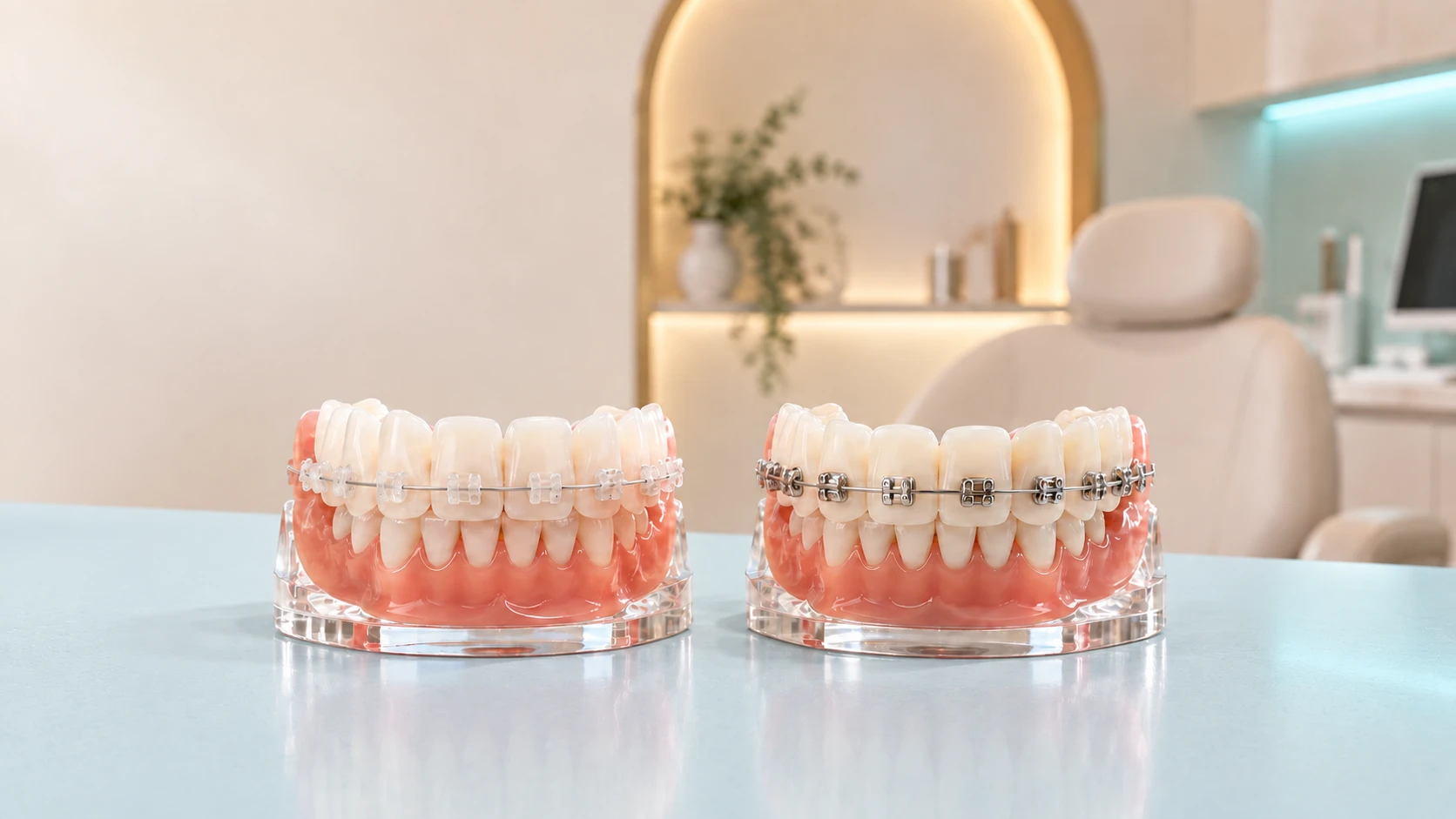
Comparing two fixed orthodontic options.
If you are considering braces, you may be deciding between ceramic braces and traditional metal braces.
Both are fixed orthodontic appliances that use brackets and wires to apply controlled forces to the teeth. However, they differ in appearance, material, durability, maintenance requirements and, in many cases, cost.
Ceramic braces are designed to be less noticeable because their brackets are tooth-coloured or translucent. Metal braces use stainless-steel brackets and are more visible.
There isn't one option that is appropriate for every patient. The suitable treatment depends on your tooth alignment, bite, oral health, treatment requirements, lifestyle and personal preferences. If you are considering braces in Dubai, an orthodontic assessment can help determine which options are appropriate for your individual circumstances.
Quick Answer: Ceramic braces use tooth-coloured or translucent brackets and are less noticeable than metal braces. Metal braces are generally more durable and may have a lower treatment cost. The appropriate option depends on your orthodontic needs, oral health, preferences and treatment plan.
Ceramic braces vs metal braces: what you need to know.
At a Glance
Comparing the two options by feature:
Appearance - Ceramic: tooth-coloured or translucent brackets; Metal: visible metal brackets
Material - Ceramic: ceramic or similar tooth-coloured material; Metal: stainless steel or metal
Visibility - Ceramic: less noticeable; Metal: more noticeable
Durability - Ceramic: suitable for many cases, may be more susceptible to fracture; Metal: generally highly durable
Treatment capability - Ceramic: can be used for many orthodontic cases; Metal: can be used for a wide range of orthodontic cases
Cost - Ceramic: often higher than metal braces; Metal: often more economical
Maintenance - Both require regular oral hygiene
Note: Treatment suitability and fees vary between patients and clinics. A consultation is required to determine the appropriate treatment plan.
What Are Metal Braces?
Metal braces are fixed orthodontic appliances used to gradually move teeth into planned positions. They consist of brackets attached to the teeth and an orthodontic wire that applies controlled forces. The orthodontist periodically adjusts the appliance according to the treatment plan.
Metal braces may be considered when:
Teeth require orthodontic movement
There is crowding or spacing
Bite correction is required
A fixed orthodontic appliance is appropriate
The patient prefers a conventional braces system
The exact type of appliance depends on the patient's orthodontic assessment.
What Are Ceramic Braces?
Ceramic braces use brackets made from ceramic or another tooth-coloured material. They function using the same general orthodontic principle as conventional fixed braces, with brackets attached to the teeth and connected using orthodontic wires. The main distinction is their appearance — because the brackets are closer in colour to natural teeth, ceramic braces may be less noticeable than metal braces.
Ceramic braces may be considered when:
A patient prefers a less noticeable fixed appliance
The orthodontic condition is suitable for ceramic brackets
The patient is willing to follow appropriate maintenance instructions
Aesthetic considerations are important to the patient
The orthodontist determines whether ceramic brackets are appropriate for the individual case.
Appearance
Appearance is one of the main reasons patients consider ceramic braces. Metal brackets are visibly noticeable against the teeth, while ceramic brackets are generally designed to blend more closely with the natural colour of the teeth. However, ceramic braces are not completely invisible — the orthodontic wire and other components may still be visible.
If minimising the visibility of fixed braces is important to you, ceramic braces may be worth discussing with your orthodontist.
Material and Durability
Metal brackets are made from materials designed to withstand the forces associated with orthodontic treatment. Ceramic brackets are also designed for orthodontic use but can be more susceptible to fracture than metal brackets in certain circumstances. This is one reason your orthodontist may recommend a particular bracket material depending on the movements required during treatment.
The choice should not be based on appearance alone — your orthodontist should consider the requirements of your individual treatment plan.
Treatment Effectiveness
Both ceramic and metal braces can be used to correct a range of orthodontic problems, although treatment suitability varies between patients.
These may include:
Crowding
Spacing
Crooked teeth
Certain bite problems
Tooth rotation
Alignment issues
The complexity of the required tooth movement, the position of the teeth and the patient's overall oral health all influence treatment planning. The appropriate appliance depends on the individual orthodontic case rather than simply the material of the bracket.
Comfort
Both ceramic and metal braces can cause some temporary discomfort, particularly when they are initially fitted or adjusted.
Patients may experience:
Pressure on the teeth
Temporary tooth sensitivity
Mild irritation of the cheeks or lips
Gum sensitivity
These effects can vary from person to person. Your orthodontic team can provide instructions on managing temporary discomfort during treatment.
Cost
In general, ceramic braces may have a higher treatment fee than conventional metal braces because of the materials and aesthetic features involved. However, the total treatment cost can vary depending on several factors.
Cost factors include:
Complexity of the case
Treatment duration
Whether one or both arches are treated
Diagnostic procedures
Number of follow-up appointments
Type of retainers required
Additional dental treatment required
Advertised starting prices should not be assumed to represent the total cost of an individual treatment plan. A personalised quotation can be provided after an orthodontic assessment.
Oral Hygiene and Maintenance
Good oral hygiene is particularly important during fixed orthodontic treatment. Brackets and wires create additional areas where food particles and plaque can accumulate. Regardless of whether you choose ceramic or metal braces, you should follow your orthodontist's cleaning instructions.
This may include:
Brushing carefully around the brackets
Cleaning between the teeth
Using interdental brushes when recommended
Attending scheduled appointments
Maintaining regular dental examinations
Following dietary instructions
With ceramic braces, maintaining good oral hygiene may also help preserve the appearance of the appliance.
Food and Lifestyle Considerations
Both types of fixed braces require some lifestyle adjustments. Your orthodontist may recommend limiting or avoiding foods that can damage brackets or wires, such as particularly hard, sticky or chewy foods.
Patients should also avoid habits such as:
Chewing ice
Biting hard objects
Opening packaging with the teeth
Excessive consumption of sticky foods
Following these instructions can reduce the likelihood of damage to the orthodontic appliance.
Which One Is Right for You?
The decision depends on your individual circumstances. There is no need to make the decision before your orthodontic consultation.
Ceramic braces may be worth considering if:
You prefer a less noticeable fixed appliance
Appearance is an important consideration
Your orthodontist considers ceramic brackets suitable for your case
You are prepared to follow the required oral hygiene routine
You understand the potential difference in treatment cost
Metal braces may be worth considering instead if durability, a more economical option, or a conventional fixed appliance matters more to you than visibility, and your orthodontist recommends metal brackets for your treatment requirements.
Are Ceramic Braces Suitable for Adults and Teenagers?
Ceramic braces may be an option for many adult patients who require fixed orthodontic treatment. Adults often consider ceramic braces because the tooth-coloured brackets can be less noticeable during work and social activities. However, age alone does not determine whether ceramic braces are appropriate.
Your orthodontist will consider factors such as:
Tooth alignment
Bite
Gum health
Existing dental restorations
Required tooth movement
Overall oral health
Ceramic braces may also be considered for some teenagers, but suitability depends on the individual orthodontic case and the patient's ability to maintain appropriate oral hygiene and follow treatment instructions.
How Long Does Braces Treatment Take?
There is no standard treatment duration that applies to every patient.
The treatment period depends on factors including:
Degree of crowding
Amount of spacing
Bite relationship
Tooth movement required
Patient compliance
Oral hygiene
Missed appointments
Complexity of the case
Some orthodontic cases may require relatively shorter treatment periods, while more complex cases can take longer. Your orthodontist can provide an estimated treatment duration after completing the necessary examination and diagnostic assessment.
What Happens During an Orthodontic Consultation?
If you are considering ceramic braces or metal braces, the consultation is an important part of the treatment process.
The consultation typically involves:
Clinical examination of your teeth, gums and bite
Diagnostic assessment, which may include X-rays, photographs or digital scans
Treatment planning based on the tooth movements required
Appliance selection, explaining the differences between available bracket types
Discussion of expected treatment duration, appointment schedule, fees and retention requirements
This allows you to make an informed decision before starting treatment.
Key takeaways.
Ceramic and metal braces are both fixed orthodontic treatment options
Ceramic braces are designed to be less noticeable than metal braces
Metal braces generally offer greater resistance to bracket fracture
Ceramic braces may have a higher treatment fee
Treatment duration depends on the patient's orthodontic condition and treatment plan
Good oral hygiene is important with either type of fixed braces
An orthodontic assessment is necessary before selecting the most appropriate treatment option
What to consider before choosing braces.
Instead of looking only at the appearance or advertised price, consider these factors before your consultation:
The type of tooth movement and bite correction you require
The estimated treatment timeline and what could affect it
What is included in the quoted treatment fee
How frequently your orthodontist expects to review your progress
The retention phase after active orthodontic treatment
How to care for your teeth and appliance throughout treatment
Instead of looking only at the appearance or advertised price, discuss these factors with your orthodontist before starting treatment.
Frequently asked questions.
Ceramic braces are less noticeable, while metal braces are generally more durable and may have a lower treatment cost. The appropriate option depends on the patient's orthodontic requirements and personal preferences.
Why choose WhiteLine Dental Clinic?
WhiteLine Dental Clinic in Al Rigga, Dubai, provides general dental and orthodontic services. Patients considering braces can undergo an orthodontic assessment to discuss their tooth alignment, bite and available treatment options.
Our dental team can explain the differences between ceramic and metal braces, discuss the factors that may affect treatment duration and fees, and help you understand which options may be appropriate based on your individual dental assessment.
Considering braces in Dubai?
If you are deciding between ceramic and metal braces, an orthodontic consultation can help you understand which options may be appropriate for your teeth and bite. At WhiteLine Dental Clinic in Al Rigga, Dubai, our dental team can assess your orthodontic needs, explain available treatment options and discuss the expected treatment process and associated fees. Book an orthodontic consultation to discuss your options.
More from the journal.

Dental Care Before Chemotherapy: What Patients Should Know

How Breast Cancer Treatment Can Affect Your Oral Health